Recycling and Sustainability — Gardening Kenton
 Gardening Kenton is committed to creating an eco-friendly waste disposal area and a thriving sustainable rubbish gardening area across Kenton and neighbouring boroughs. Our approach focuses on reducing landfill, increasing reuse, and improving local resource loops for soil, wood, green waste and packaging. We set an ambitious recycling percentage target to drive measurable change: a 65% recycling and reuse rate within five years, rising to 75% by 2035. This target guides our operations, procurement and community partnerships.
Our green mission is practical and trackable. We combine regular green waste collections with targeted bulky waste reuse, on-site chipping for wood, and salvaging reusable soil and stone. This creates a functional sustainable rubbish gardening area where materials are sorted, prepared and redistributed. We emphasise low-impact methods: compacting recyclable packaging on site, segregating organic compostables for local processing, and integrating reclaimed materials into new garden beds, tree pits and hard landscaping.
 We work in close coordination with the local boroughs' approach to waste separation — notably the systems used by Brent and Harrow — where household separation into dry recycling, food waste caddies and green bins sets a useful standard for our commercial collections. We mirror those practices: clear streams for paper/card, glass and cans; dedicated green waste; separate soil and inert materials; and a small electricals and batteries protocol for tools and chargers. Our site acts as a community-ready transfer hub before materials move to transfer stations or charity partners.
How we manage garden waste and recycling locally
We maintain strong links with local transfer stations and reuse centres to ensure materials diverted from landfill have a second life. Frequent trips to nearby civic amenity sites and licensed transfer stations allow us to channel green waste for industrial composting, send wood to chippers, and deliver inert soils for screening and reuse. Our logistics schedule prioritises full loads and low-emission routes to reduce carbon per tonne moved, helping meet our low-carbon operations commitment.
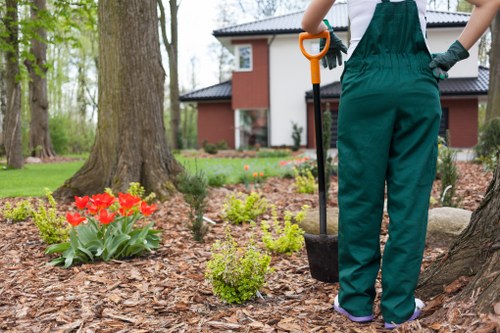 Partnerships are fundamental. Gardening Kenton collaborates with local charities and community groups to redistribute usable items — from planters and paving to surplus topsoil. We work with local environmental charities, community allotments and social enterprises to rehome salvageable materials rather than send them to processing. These partnerships boost local circularity: charities get resources; community projects get affordable materials; our waste footprint shrinks.
Our on-site sorting follows a clear, consistent system: incoming waste is assessed, then routed into recyclable streams or flagged for reuse. Typical recycling activities include green bin collections, composting of garden prunings, timber chipping and reuse, separation of plastics and metals for municipal processing, and careful handling of contaminated soil. We also run seasonal drives to collect bulky garden items for charitable reuse.
Transport, transfer stations and operational standards
To lower transport emissions we operate a fleet of low-carbon vans and hybrids, supplemented by electric light vans for short urban runs. Vehicles are selected for load efficiency and Euro 6 emissions standards where electrification isn't yet practical. Our drivers use optimised routing software to reduce mileage and idle time, and we prioritise consolidated trips to borough transfer stations to avoid half-empty runs. This helps limit operational emissions in our pursuit of an eco-friendly waste disposal area.
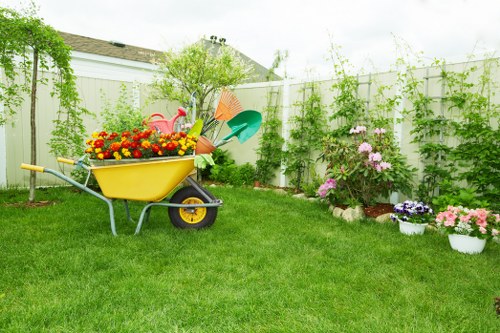 We keep an up-to-date list of recommended local transfer stations and reuse centres, working within borough frameworks to ensure compliance with local waste separation rules. These transfer stations accept segregated loads: green matter for composting, timber for chipping, inert soils for screening, and mixed recyclables for council processing. We document each movement so our recycling percentage target is auditable and transparent.
 Practical initiatives include on-site composting bays, a small-scale soil screening setup, and a reclaimed materials yard where usable paving, sleepers and stones are stored. Community redistribution is a priority: items that are structurally sound are offered to partner charities and community projects before any processing. This not only reduces disposal volumes but strengthens local networks and supports sustainable regeneration across neighbourhoods.
Gardening Kenton's sustainability programme is an ongoing cycle of improvement: we measure outcomes against our recycling percentage targets, refine segregation and logistics, expand charity partnerships, and renew investment in low-carbon vans and equipment. By combining practical site-based recycling, borough-aligned separation practices, robust transfer-station links and community partnerships, we create an effective model for an eco-friendly waste disposal area and a resilient sustainable rubbish gardening area that serves Kenton and its neighbouring communities.